A good keyword research tool for SEO will help you in finding relevant keywords that your target audience is truly looking for. Valuable data such as search volumes, competition levels, or competitor rankings will land on your lap; then, you can exactly work on content that opens the portal to a higher ranking in search engines. Providing a good SEO keyword research tool will ensure you are not just taking a blind chance but instead standing behind numerical data. A perfect keyword research tool, such as SEOBIX, will point out hidden opportunities, long-tail keywords, and SEO gaps that put you ahead of the competition. It means, therefore, more traffic, better visibility, and increased conversions.
What Is Keyword Research and How Does It Work?
Keyword research covers identifying and analyzing the words and phrases used by your clients or potential customers when they perform searches online, mostly on search engines like Google. Therefore, you create content that aims at supporting user intent so it has a better chance of ranking well on search results. It is one of the pillars upon which every good SEO campaign stands and, really, one of the things you want to do as you initiate new content or attempt to better optimize existing pages.
SEO Without Keyword Research?
Why Use SEOBIX for Keyword Research?
SEOBIX isn’t just another keyword tool—it’s designed to give you accurate, actionable insights. Here’s why digital marketers and SEO professionals trust SEOBIX:
1. Real and accurate search data
Real and accurate search data in SEOBIX means you get up-to-date keyword metrics directly based on current search trends and behavior.
2. Keywords difficulty and volume
Keyword Difficulty shows how hard it is to rank for a keyword, while Search Volume indicates how often it's searched monthly.
3. Related keywords and long-tail suggestions
The Related Keywords & Long-Tail Suggestions feature helps you discover keyword variations and specific search phrases that users are actively typing into search engines.
4. Local SEO Keyword Support
Local SEO Keyword Support in SEOBIX helps you discover location-specific keywords that your target audience is searching for in their area.
Step-by-Step: How to Do Keyword Research with SEOBIX
Step 1: Start with a root keyword
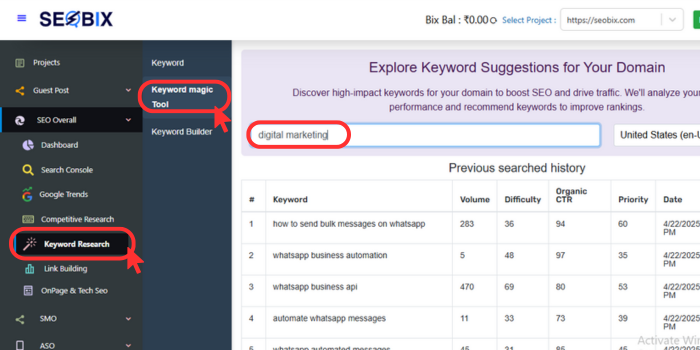
Type your core topic into the SEOBIX Keyword Magic Tool. For example, if you're writing about cake recipes, type “cake recipes ideas."
Step 2: Analyze Keyword Metrics
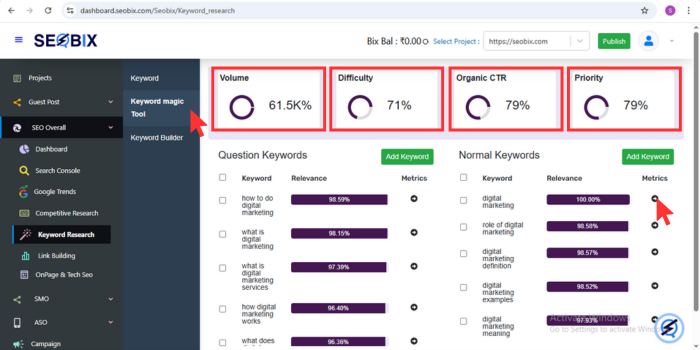
SEOBIX provides keyword volume, difficulty score, CPC, and trend data. Focus on high-volume, low-difficulty keywords for quicker results.
Step 3: Find Long-Tail Opportunities
Scroll through the “Related Keywords” section. These long-tail keywords often have lower competition and higher conversion potential.
Step 4: Check Competitor Keywords
Use the Competitor Keyword Gap Tool to see what keywords your competitors rank for. You can even filter results by domain authority or page-level performance.
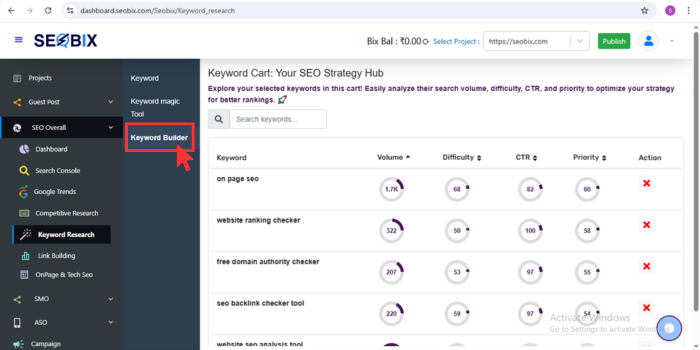
Step 5: Build Your Keyword List
SEOBIX's Keyword Gap Tool: Find What You’re Missing
One standout feature of SEOBIX is the Keyword Gap Analysis Tool. Just enter your website and a competitor’s domain. The tool shows which keywords your competitors rank for, but you don’t. These are golden content opportunities.
1. Enter Your Website and a Competitor's Domain: You input your own website's URL and the URL of one of your competitors.
2. Identify Keyword Differences: The tool compares the keywords that each website ranks for. It reveals the keywords that your competitor is ranking for, but you are not.
Final Thought
Keyword research covers identifying and analyzing the words and phrases used by your clients or potential customers when they perform searches online, mostly on search engines like Google. Therefore, you create content that aims at supporting user intent so it has a better chance of ranking well on search results. It is one of the pillars upon which every good SEO campaign stands and, really, one of the things you want to do as you initiate new content or attempt to better optimize existing pages.
Not doing any keyword research with SEO is like navigating without having a map. Without identifying the right keywords, you will either be targeting the wrong set of audience, or simply lose the traffic that is driving towards you. The best keyword research tool is your secret card to finding the best keywords: high traffic and low competition, relevant to your content. A keyword research tool will bring together all the pertinent stats on search trends and competitor analysis, meaning your SEO strategy does not stray away from its purpose and becomes effective instead. Do not make this mistake- keyword research stands as the first pillar of an SEO campaign that truly works.